Cryptocurrency's Fear and Greed Index": A Digital Attempt to Measure Market Sentiment

Aug 30, 2025 By

The cryptocurrency market, known for its extreme volatility and rapid sentiment shifts, has long struggled with quantifying the psychological forces driving its price movements. While traditional markets have established indicators like the VIX to measure fear, the crypto space lacked a unified metric—until the creation of the Fear and Greed Index. This digital barometer attempts to translate the collective emotional state of market participants into a single, comprehensible number, offering a snapshot of whether investors are driven by panic or euphoria at any given moment.


Developed by alternative.me, the Crypto Fear and Greed Index aggregates data from multiple sources to generate its daily reading. It analyzes factors such as market volatility, trading volume, social media sentiment, surveys, and Bitcoin dominance. By synthesizing these diverse inputs, the index produces a score from 0 to 100, where 0 signifies "Extreme Fear" and 100 indicates "Extreme Greed." This numerical value is then categorized into emotional tiers, providing a quick, intuitive gauge of market temperament that both novice and seasoned traders can understand at a glance.


The methodology behind the index is both pragmatic and insightful. Volatility is measured by comparing current market fluctuations to historical averages, with high volatility often correlating with fear. Market momentum and volume are analyzed to see if buying pressure is driven by FOMO (fear of missing out) or selling by panic. Social media analysis scans platforms like Twitter and Reddit for bullish or bearish keywords, while surveys and Bitcoin dominance round out the qualitative and structural aspects of market sentiment. This multi-faceted approach helps mitigate the limitations of any single data source.


In practice, the index has often served as a contrarian indicator. Historically, periods of "Extreme Fear" have frequently coincided with market bottoms or buying opportunities, as panic selling exhausts itself. Conversely, "Extreme Greed" has many times marked market tops, where irrational exuberance suggests an overheated market poised for a correction. This pattern echoes the famous Warren Buffett adage: "Be fearful when others are greedy, and greedy when others are fearful." The index provides a data-driven way to apply this wisdom to the crypto markets.


However, the Fear and Greed Index is not a crystal ball. Its limitations are significant. It is a lagging indicator, reflecting sentiment that has already been expressed in market actions. It cannot predict unforeseen events, such as regulatory crackdowns, major exchange hacks, or macroeconomic shifts that can instantly override prevailing sentiment. Furthermore, its heavy reliance on Bitcoin-related data means it may not accurately capture sentiment in the broader altcoin market, which can sometimes decouple from Bitcoin's trends.


Despite its shortcomings, the index's value lies in its ability to contextualize market noise. For traders drowning in charts, news headlines, and social media hype, it offers a moment of clarity—a simple metric that summarizes complex human emotions. It encourages discipline, reminding investors that emotional extremes often present the greatest risks and opportunities. It doesn't provide answers, but rather frames the right questions: Is the current sentiment justified by fundamentals, or is it driven by herd mentality?


The creation and popularity of the Fear and Greed Index signify a maturation in the cryptocurrency ecosystem. It represents an attempt to apply analytical rigor to a market famously driven by speculation and emotion. While it will never replace fundamental analysis or sound risk management, it has cemented its role as a valuable tool in the trader's toolkit—a digital compass for navigating the often turbulent and irrational waters of cryptocurrency investing.



Recommend Posts
Finance

On-Demand Insurance: Covering Only the Moment of Use"

By /Aug 30, 2025

The traditional model of insurance, a stalwart of financial planning for centuries, is undergoing a radical transformation. For generations, we have paid premiums based on generalized risk profiles and long-term contracts, often covering assets that spend significant time idle. A new paradigm, however, is swiftly emerging from the digital ether, promising a fundamental shift in this relationship: On-Demand Insurance. This is not merely an incremental change but a complete reimagining of the insurance principle, tailoring protection to the precise moment of need.
Finance

Supply Chain Disruption Insurance: From Optional" to "Essential"

By /Aug 30, 2025

In boardrooms and executive meetings across the globe, a quiet but significant shift is taking place in how businesses perceive risk management. For decades, supply chain disruption insurance was viewed as a peripheral consideration—an optional add-on that few companies seriously considered unless mandated by specific contractual obligations or operating in particularly volatile regions. Today, that perception has been fundamentally upended. What was once an afterthought has rapidly evolved into a cornerstone of corporate resilience strategy.
Finance

The Profit Dilemma of Insurtech: How Can Disruptors Achieve Sustainable Growth?

By /Aug 30, 2025

The insurtech revolution promised to reshape the very foundations of the insurance industry. Armed with cutting-edge technology, data analytics, and a customer-centric ethos, a wave of startups vowed to dismantle the slow-moving, paper-based giants. They offered sleek apps, on-demand coverage, and personalized policies, capturing the imagination of consumers and investors alike. Billions in venture capital flooded the sector, fueling rapid growth and sky-high valuations. The narrative was one of inevitable disruption.
Finance

The Cost of the Disposition Effect: Why Do Investors Always Sell Winners and Hold Losers?

By /Aug 30, 2025

In the intricate world of investing, where logic and data often reign supreme, a curious and persistent behavioral anomaly continues to baffle even the most seasoned market participants. This phenomenon, known as the disposition effect, describes the powerful and often costly tendency for investors to sell assets that have increased in value while stubbornly holding on to those that are losing money. It is a paradox that flies in the face of conventional wisdom, which would suggest cutting losses early and letting profits run. Yet, time and again, portfolios are shaped not by strategic foresight but by deep-seated psychological biases.
Finance

The Evolution of Mental Health Insurance Coverage: From Luxury to Standard Employee Benefit

By /Aug 30, 2025

For decades, mental health coverage was treated as a luxury in the insurance landscape, an optional rider or a minimally covered afterthought tucked away in the fine print of employer-sponsored health plans. The conversation around workplace wellness was predominantly physical—annual check-ups, gym memberships, and smoking cessation programs. Mental and emotional well-being existed in the shadows, often stigmatized and separated from the concept of overall health. The journey from this peripheral status to becoming a central, expected pillar of comprehensive employee benefits is a story of cultural awakening, economic reckoning, and legislative action.
Finance

Decision Fatigue": How to Avoid Poor Financial Choices in the Age of Information Overload?

By /Aug 30, 2025

In an age where financial advertisements pop up in our social media feeds, banking apps send real-time notifications about market fluctuations, and news outlets broadcast endless streams of economic forecasts, the modern consumer faces a relentless barrage of financial information. This constant exposure, while seemingly empowering, carries a hidden psychological cost known as decision fatigue. This cognitive phenomenon, where the quality of our decisions deteriorates after a long session of choice-making, is becoming a significant barrier to sound financial health. The very tools designed to inform us are, paradoxically, setting the stage for poorer choices.
Finance

The Lottery Stock" Phenomenon: Why Do Retail Investors Still Flock to It, Knowing It's a Gamble?

By /Aug 30, 2025

The lottery stock effect represents one of the most intriguing puzzles in modern behavioral finance. At its core, it describes the perplexing tendency of individual investors—often retail traders with limited capital—to gravitate toward high-risk, low-probability stocks that resemble lottery tickets. These securities typically share common characteristics: extreme volatility, penny stock status, and narratives of explosive potential, yet they statistically underperform over the long run. The question that baffles economists and market veterans alike is not whether this phenomenon exists, but why it persists so stubbornly in the face of rational evidence and repeated financial losses.
Finance

Securitizing Longevity Risk: How to Package Your Pension with Human Lifespan into Financial Products?

By /Aug 30, 2025

In the ever-evolving landscape of financial innovation, one of the most intriguing developments has been the securitization of longevity risk. This complex yet fascinating process involves transforming the uncertainties surrounding human lifespan into tradable financial instruments. At its core, it represents a sophisticated method for pension funds and insurers to manage their exposure to people living longer than anticipated—a phenomenon that threatens the stability of retirement systems worldwide.
Finance

Cyber Insurance Premiums Soar: The Hidden Cost of Corporate Digital Transformation

By /Aug 30, 2025

The digital transformation wave has swept across industries, promising unprecedented efficiency, scalability, and innovation. Yet beneath the glossy surface of this technological revolution lies a less discussed but rapidly escalating financial burden: the soaring cost of cyber insurance. As businesses increasingly migrate their operations online, the very technologies that empower them are also exposing them to heightened risks, and insurers are responding with premium hikes that are catching many enterprises off guard.
Finance

Digital Hoarding Syndrome": Have We Lost the Real Perception of Money in a Cashless Society?

By /Aug 30, 2025

In the hushed glow of smartphone screens and the seamless tap of contactless payments, a new financial reality is quietly taking root. We have glided, almost without noticing, into the age of digital hoarding—a phenomenon where money transforms from tangible currency into abstract numbers on a screen, stored and often forgotten in digital vaults. This shift prompts a profound question: in our relentless march toward a cashless society, are we losing our grip on the visceral, tangible understanding of money that once defined our financial lives?
Finance

Parametric Insurance: The Agricultural Revolution of Automatic Claims with Satellite Data

By /Aug 30, 2025

In the vast, sun-scorched fields of the American Midwest, a quiet revolution is taking root. For generations, farmers have battled the elements, their livelihoods hanging in the precarious balance of rain and drought, hail and heat. Traditional crop insurance, while a critical safety net, has often been a source of frustration—a slow, paperwork-laden process requiring adjusters to survey damage, a task both time-consuming and subjective. But a new paradigm is emerging from the skies, leveraging the cold, precise gaze of satellites to transform risk management in agriculture. This is the era of parametric insurance, a data-driven approach that promises not just to indemnify loss, but to redefine resilience itself.
Finance

Cryptocurrency's Fear and Greed Index": A Digital Attempt to Measure Market Sentiment

By /Aug 30, 2025

The cryptocurrency market, known for its extreme volatility and rapid sentiment shifts, has long struggled with quantifying the psychological forces driving its price movements. While traditional markets have established indicators like the VIX to measure fear, the crypto space lacked a unified metric—until the creation of the Fear and Greed Index. This digital barometer attempts to translate the collective emotional state of market participants into a single, comprehensible number, offering a snapshot of whether investors are driven by panic or euphoria at any given moment.
Finance

Financial Trauma: How Past Economic Crises Shape a Generation's Investment Perspective?"

By /Aug 30, 2025

The echoes of financial trauma reverberate through generations, subtly yet profoundly shaping the collective psyche and, most tangibly, its approach to investing. To understand the investment philosophy of a generation is to look back at the economic crucible in which it was forged. For those who came of age during periods of severe economic distress—the Great Depression of the 1930s, the stagflation of the 1970s, or the Great Recession of 2008—the financial landscape is not merely a market of opportunities but a terrain scarred by past crises, demanding a specific and often cautious navigation.
Finance

FinTok's Oracles": How Do Influencers Impact Retail Trading Flows?

By /Aug 30, 2025

In the sprawling digital ecosystem of financial social media, a new breed of influencers has emerged from the platforms collectively known as FinTok. These self-styled prophets, armed with slick video edits and an air of unshakeable confidence, are commanding the attention of millions of retail investors, fundamentally reshaping the flow of capital in global markets. Their pronouncements on stocks, cryptocurrencies, and obscure options strategies are not merely entertainment; they are catalysts for significant, and often volatile, market movements driven by the collective action of their devoted followers.
Finance

Geopolitical Risk Insurance: An Indispensable Talisman" for Multinational Corporations

By /Aug 30, 2025

In an increasingly interconnected global economy, multinational corporations face a complex web of geopolitical risks that can disrupt operations, jeopardize investments, and threaten long-term viability. From political instability and regulatory changes to expropriation and currency inconvertibility, these risks are often beyond the control of even the most seasoned business leaders. As companies expand into emerging markets and politically volatile regions, the need for robust risk mitigation strategies has never been more critical. Among these strategies, geopolitical risk insurance has emerged as an indispensable tool, serving as a vital safeguard against unforeseen political upheavals.
Finance

Drones and Remote Sensing Technology: Revolutionizing Property Insurance Loss Assessment and Surveying

By /Aug 30, 2025

The insurance industry, historically characterized by paper-laden processes and manual assessments, is undergoing a profound technological metamorphosis. At the forefront of this revolution are Unmanned Aerial Vehicles (UAVs), commonly known as drones, coupled with sophisticated remote sensing technologies. This powerful synergy is not merely an incremental improvement but a fundamental paradigm shift in how property and casualty insurers approach claims adjusting and damage assessment, moving the entire process from the ground to the sky.
Finance

My Fave Side Hustle Earns $500/Month (No Experience!)

By Grace Cox/Nov 12, 2025

I never imagined I'd find a side hustle that actually pays consistently without requiring special skills or previous experience. Like many people, I'd tried everything from food delivery to online surveys, only to end up with sore feet and maybe enough money for a single coffee. The turning point came when I realized I was already doing something daily that could actually generate income—and it wasn't what you'd typically find on those "easy money" lists.
Finance

Behavioral Coaching: The Core Service of Next-Generation Wealth Management

By /Aug 30, 2025

In the rapidly evolving landscape of wealth management, a quiet revolution is underway. The traditional model, long focused on portfolio performance and financial metrics, is increasingly being challenged by a more holistic approach. At the heart of this shift lies behavioral coaching, a service that is fast becoming the cornerstone of next-generation wealth advisory. It represents a fundamental recognition that the greatest risk to an investor’s financial well-being is often not market volatility, but their own psychological biases and emotional responses.
Finance

Revenge Spending" and "Fearful Saving": The Behavioral Economics Legacy of the Post-Pandemic Era

By /Aug 30, 2025

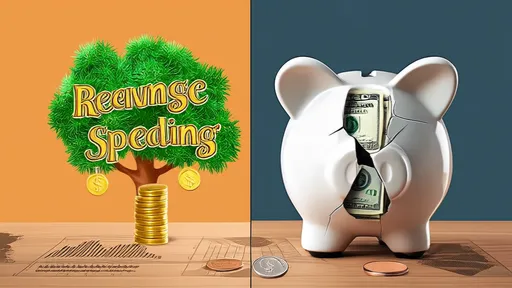
In the wake of global lockdowns and economic standstills, a curious dichotomy has emerged in consumer behavior that economists are calling the great behavioral divergence. Two terms have risen to prominence in financial discourse: revenge spending and fear saving. These phenomena represent not just temporary reactions to crisis, but potentially permanent shifts in how people approach money, value, and consumption.
Finance

Neuroeconomics: Using Brain Scans to Study Why Traders Make Mistakes Under Pressure

By /Aug 30, 2025

In the high-stakes world of financial trading, split-second decisions can mean the difference between monumental gains and catastrophic losses. For decades, economists and psychologists have attempted to understand the human elements that lead to costly errors under pressure. Traditional theories often fell short, relying on self-reported data and behavioral observation that couldn't capture the real-time, subconscious processes at play. The emergence of neuroeconomics, a revolutionary interdisciplinary field marrying neuroscience, economics, and psychology, has fundamentally changed this. By peering directly into the brain using advanced imaging technology, scientists are now beginning to decode the biological underpinnings of why even the most seasoned traders can falter when the pressure mounts.