The traditional model of insurance, a stalwart of financial planning for centuries, is undergoing a radical transformation. For generations, we have paid premiums based on generalized risk profiles and long-term contracts, often covering assets that spend significant time idle. A new paradigm, however, is swiftly emerging from the digital ether, promising a fundamental shift in this relationship: On-Demand Insurance. This is not merely an incremental change but a complete reimagining of the insurance principle, tailoring protection to the precise moment of need.
The core premise of on-demand insurance is breathtakingly simple yet profoundly disruptive: insurance coverage is activated only for the specific duration it is required. Imagine paying for car insurance only for the hours you are actually driving, or for gadget insurance solely for the afternoon you lend your expensive camera to a friend. This model pivots away from the traditional blanket annual policy towards a hyper-personalized, micro-temporal approach. It is the ultimate expression of the sharing economy, applied to risk management.
The technological bedrock enabling this revolution is a confluence of advancements we now take for granted, yet whose combined power is extraordinary. The proliferation of smartphones with precise GPS and constant connectivity provides the perfect platform for user interaction and real-time data collection. The Internet of Things (IoT) allows everyday objects—from cars and drones to bicycles and laptops—to transmit their status, location, and usage data seamlessly. This constant stream of telematics is the lifeblood of on-demand models, allowing insurers to measure risk with unprecedented granularity.
Furthermore, powerful algorithms and artificial intelligence can process this vast dataset in milliseconds, calculating personalized, dynamic premiums in real-time. This technological ecosystem removes the friction and guesswork that have long characterized traditional insurance underwriting. The result is a system that is infinitely more responsive and aligned with actual usage patterns rather than broad demographic assumptions.
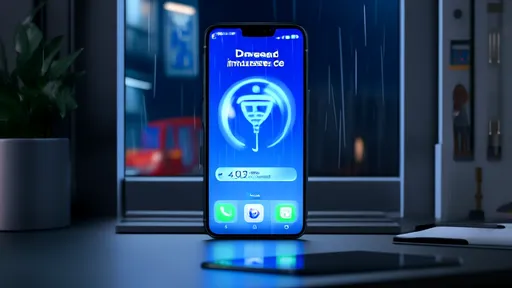
The potential applications for this flexible model are vast and stretch across numerous sectors of the economy. In the automotive world, usage-based insurance (UBI) has been a precursor, but on-demand takes it further. Services now allow drivers to toggle coverage on and off directly from a mobile app, perfect for those who use car-sharing services, have a second vehicle rarely used, or simply prefer public transport for their daily commute. The financial savings for low-mileage drivers can be substantial.
The travel industry represents another fertile ground. Instead of purchasing an annual travel insurance policy or even a standard two-week trip package, travelers can now activate a comprehensive policy that covers them precisely from the moment they leave their home until they return. Some services even allow for the activation of specific coverages, like ski insurance for just the days on the slopes or gadget cover for the duration of the holiday. This precision eliminates the redundancy of paying for coverage during periods of no travel.
Perhaps the most dynamic area is within the burgeoning gig and sharing economies. Freelance photographers can insure their equipment for a specific shoot. Delivery drivers using their own vehicles can have commercial insurance that activates only during their delivery shifts. Individuals renting out their homes on platforms like Airbnb can secure liability and property damage coverage that is perfectly synchronized with their guests' booking dates. This flexibility is essential for those whose work and asset usage are inherently variable and project-based.
For the modern consumer, the allure of on-demand insurance is multifaceted. The most immediate and compelling benefit is cost efficiency. Customers pay only for the protection they actually use, translating to direct savings, especially for those who do not heavily utilize their assets. This pay-as-you-live model aligns insurance costs directly with lifestyle, making it a far fairer proposition.
This leads to the second major benefit: unprecedented flexibility and control. Policyholders are no longer locked into long-term contracts with penalties for cancellation. They can manage their risk exposure on a daily, hourly, or even minute-by-minute basis, empowering them to make financial decisions that mirror their real-world activities. This sense of agency is a significant departure from the passive nature of traditional insurance.
The convenience factor cannot be overstated. The entire process—from getting a quote and purchasing a micro-duration policy to filing a claim—is handled through intuitive mobile applications. This seamless digital experience, devoid of paperwork and lengthy phone calls, meets the expectations of a generation accustomed to managing their lives from their smartphones.
However, this innovative model is not without its significant challenges and points of criticism. A primary concern revolves around data privacy and security. On-demand insurance requires a continuous and intimate level of data sharing. Insurers are tracking location, usage hours, driving behavior, and more. This raises critical questions about who owns this data, how it is stored, and how it might be used beyond calculating premiums. The potential for surveillance and data breaches is a serious consideration that both regulators and companies must address transparently.
Another hurdle is the potential for consumer confusion. The simplicity of an annual policy, while sometimes inefficient, is easy to understand. Managing multiple micro-policies, ensuring there are no gaps in coverage, and understanding the terms for activation and deactivation require a higher level of engagement and financial literacy from the consumer. The risk of accidentally being uninsured for a brief period is a new type of problem that traditional policyholders never faced.
From the insurer's perspective, the actuarial models are immensely complex. Pricing risk for tiny, specific slices of time based on real-time data is a formidable task compared to pricing based on annualized statistical averages. Furthermore, the risk of adverse selection is heightened; the customers most likely to seek on-demand coverage for a specific activity might be those who intuitively know the risk is high at that moment.
Regulators, often slow to adapt to technological disruption, are playing catch-up. Existing insurance laws and consumer protection frameworks were designed for a different era. Creating a regulatory environment that fosters innovation while ensuring consumer protection, market stability, and fairness is a delicate balancing act that is still very much a work in progress across the globe.
Despite these challenges, the momentum behind on-demand insurance is undeniable. It is a direct response to a cultural shift towards customization, flexibility, and digital-first solutions. As technology continues to evolve, with IoT devices becoming even more sophisticated and AI models more precise, the accuracy and appeal of these services will only grow.
We are likely to see a future where insurance becomes a silent, seamless background service, deeply integrated into the platforms we already use. Your ride-sharing app will offer liability coverage for the ride, your home-sharing platform will embed property insurance into each booking, and your smart home system will dynamically adjust its policy based on whether you are home or away. Insurance will cease to be a standalone product and instead become a fluid feature of the digital ecosystem.
In conclusion, on-demand insurance is far more than a novel niche product; it is the vanguard of a customer-centric revolution in risk management. By leveraging technology to align cost with consumption, it promises a fairer, more efficient, and empowering system. While it must navigate complex issues of privacy, regulation, and consumer behavior, its trajectory points toward a future where insurance is truly personalized, activated not for a year, but for a moment.
By /Aug 30, 2025

By /Aug 30, 2025

By /Aug 30, 2025

By /Aug 30, 2025
By /Aug 30, 2025

By /Aug 30, 2025

By /Aug 30, 2025

By /Aug 30, 2025

By /Aug 30, 2025
By /Aug 30, 2025

By /Aug 30, 2025
By /Aug 30, 2025

By /Aug 30, 2025

By /Aug 30, 2025

By /Aug 30, 2025

By /Aug 30, 2025

By Grace Cox/Nov 12, 2025

By /Aug 30, 2025
By /Aug 30, 2025

By /Aug 30, 2025